
Steel & Mining Manager
The steel industry is currently facing a variety of challenges – sometimes one at a time, sometimes all at once. Controlling diffuse emissions falls into the latter category.
From raw material yards to sinter – and coke oven-plants, dust control has become a major objective and a powerful tool for reducing particulate matter (PM) emissions.
The reasons are manifold. Naturally, environmental responsibilities are a key driver, but they come hand-in-hand with creating a hazard-free workplace, complying with regulatory standards, achieving SDG targets for stakeholders, and simply maintaining good relations with neighboring communities around the steel mill.
While channeled emissions can be managed with well-established technologies such as dedusting devices and wet scrubbers, diffuse emissions pose a greater challenge due to their unpredictable nature. Yes – they are diffuse, and the factors influencing dust generation are numerous.
Three main areas typically come to mind when evaluating dust sources in a steel mill:
Each of these areas share common pain points:
Stockpiles are a major source of dust emissions. Often located in windy areas like harbors, they present large surfaces vulnerable to erosion. This leads to dusty conditions in raw material yards and material loss, which can directly impact production costs.
To mitigate these effects, producers use aqueous solutions with crusting agents that are sprayed onto stockpiles, forming a solidified layer resistant to wind erosion.
So – easy fix? Only partially.
Raw material yards are busy environments. Stockpile management is an art in itself. Ships, trucks, or trains may arrive at any moment, unloading and forming new piles. Amid this constant activity, dust control must still be performed.
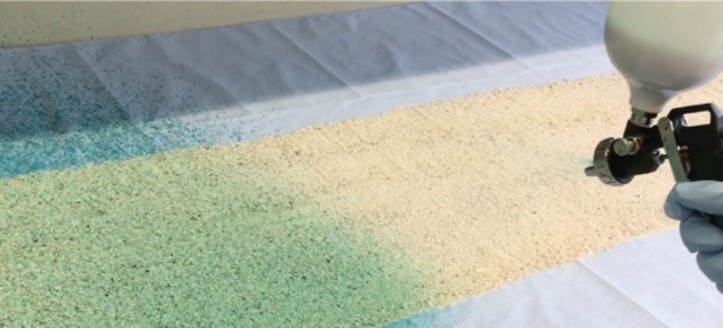
From a distance, a crust formed by conventional treatment is a barely visible. A practical solution is to use crusting agents in different colors – such as Ferrosolf® in white or green – allowing easy visual identification of treated piles, assessment of crust coverage, and planning of future treatments.
Unpaved roads are another dust source, especially with heavy machinery in use. Depending on meteorological conditions, either crust-forming agents or hygroscopic materials are applied. While crusts tend to break down over time, hygroscopic materials create a wetting effect that prevents dust formation. Kurita has advanced this approach by developing a product that combines crust formation and wetting effects, with an environmentally friendly footprint.
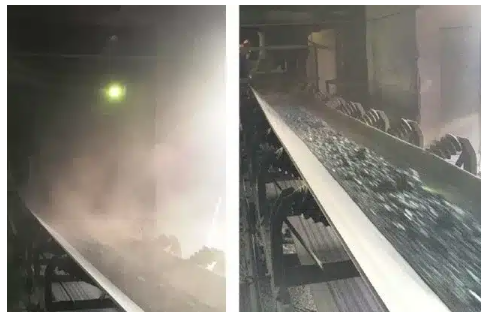
Conveyor belt systems present unique challenges, especially when transporting hot materials like sinter or coke. Two main dust control methods are used here: wet spray and foam-based systems.
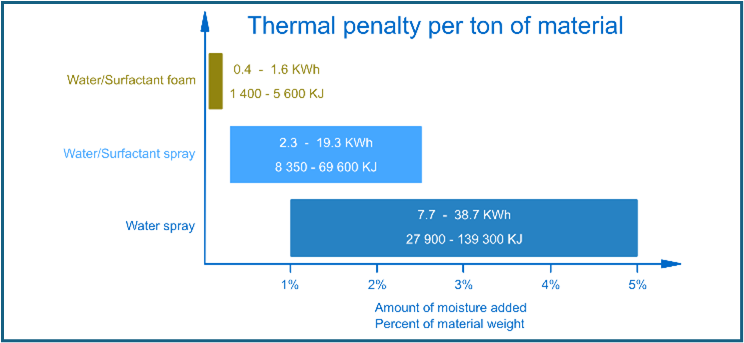
Wet spray systems can be effective due to their cooling effect, but they also introduce moisture into the material. This moisture must be evaporated in subsequent processes (e.g., blast furnaces or coke ovens), resulting in a thermal penalty and increased total cost of ownership (TCO).
Foam systems, which deliver a relatively “dry” foam using compressed air and specialized nozzles, can achieve similar dust reduction while minimizing water usage – down to as little as 0.1% (1000 ppm). Foam units are ideal when the process or material cannot tolerate excess moisture, or when minimizing energy penalties is crucial. For this, Kurita uses its proprietary FFE® System, which features an automated unit for foam creation and dust control.
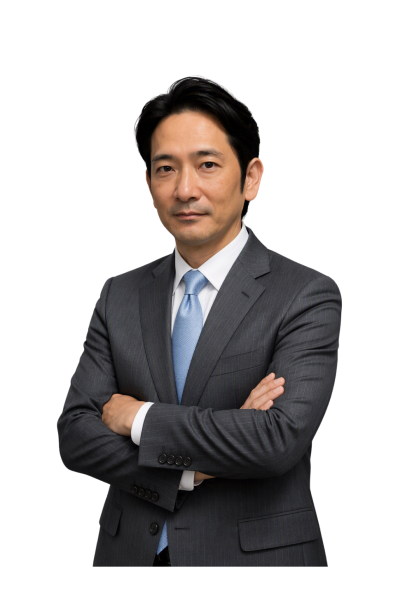
Mr. Tetsuya Teramoto has served as Managing Director of Kurita R&D Asia Pte. Ltd. since 2024. Since joining Kurita Water Industries in 2006, he has accumulated nearly 20 years of experience in technology strategy, research and development, and business innovation, including investments in startup companies.
Throughout his career, Mr. Teramoto has led development projects across Japan, China, and the United States. Since 2023, he has been based in Singapore, where he has focused on accelerating technology development aligned with ASEAN market needs, strengthening partnerships with startups, universities, and other ecosystem stakeholders, and driving the creation of emerging solutions that contribute to the Kurita Group’s growth.
Mr. Teramoto holds a Master’s degree in Biosystem Studies from the University of Tsukuba, Japan. Leveraging his expertise in both research and development and business strategy, he is committed to driving innovation that transforms technology into business value and sustainable growth opportunities.

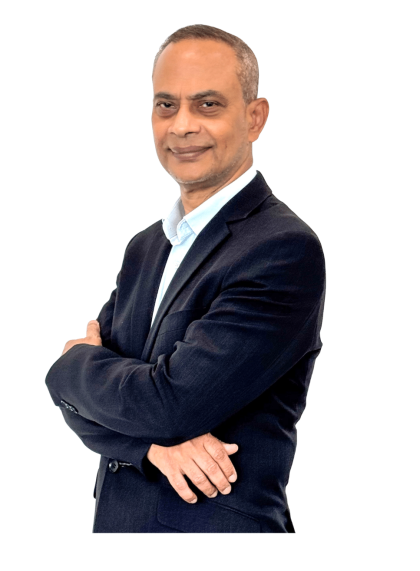
Mr. Mohamad Zackariya has served as Managing Director of Kurita (Singapore) Pte. Ltd. since April 2023, capping a distinguished career of more than 25 years with the company. A Singaporean national, he joined Kurita Singapore in 1998 as a Design Engineer in the Plant Division and progressed through a series of leadership roles, including Manager, General Manager, Director, and ultimately Managing Director. His extensive experience has played a key role in strengthening the company’s technical capabilities, customer partnerships, and business growth across the region.
Holding a Bachelor’s Degree in Mechanical Engineering from University of Moratuwa, Sri Lanka and a Post Graduate Diploma in Business Management from Singapore Institute of Management, Mr. Zackariya combines deep technical expertise with strong business leadership. He is committed to advancing Kurita’s mission of creating shared value through innovation, operational excellence, and sustainable water solutions that support customers and industries throughout Southeast Asia.
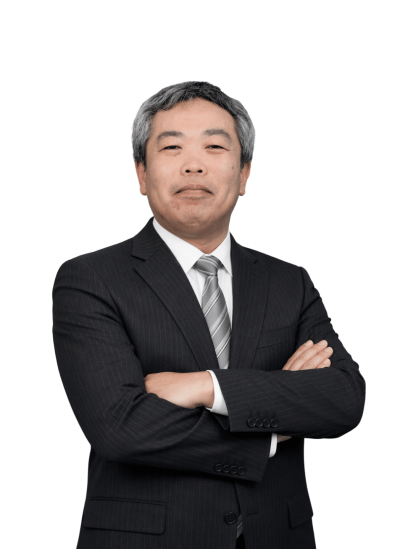
Mr. Masato Hirai serves as ASEAN Regional Chief Administration Officer at Kurita, a role he has held since 2023. With more than 25 years of experience in corporate administration, financial planning, and business operations, he brings extensive expertise in supporting organizational growth, strengthening governance, and driving operational excellence across international business environments.
Mr. Hirai joined Kurita Group in 2021 and has held leadership positions in Japan, Malaysia, Thailand, and Indonesia. Throughout his career, he has been responsible for financial planning and analysis, business administration, and the management of cross-functional corporate operations. He has also supported overseas subsidiaries across Asia, Europe, and North America, contributing to the development of effective business practices and strong stakeholder relationships. Prior to joining Kurita, he held management and planning roles at several multinational manufacturing and chemical companies.
Known for his strategic vision and collaborative approach to leadership, Mr. Hirai is committed to strengthening organizational performance and creating long-term sustainable growth. Currently based in Indonesia, he leverages extensive international experience to support Kurita’s regional development and business transformation initiatives. He graduated from Hitotsubashi University, Japan, with a Bachelor of Social Sciences degree in 1999.
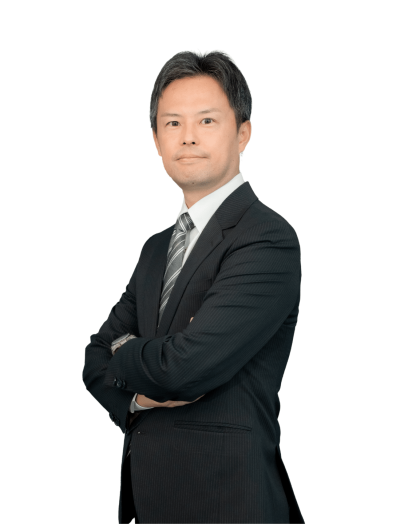
Mr. Toshiaki Nakai serves as General Director of Kurita-GK Vietnam Co. Ltd., a position he has held since April 2026. With more than 20 years of experience at Kurita, he has developed extensive expertise in water treatment solutions, business development, and customer partnership management across a wide range of industrial sectors, including general manufacturing, oil refining, and steel production.
Since joining Kurita Water Industries Ltd. in 2004 as a Sales Engineer, Mr. Nakai has supported customers in optimizing water use, enhancing operational efficiency, and advancing sustainability initiatives. He later expanded his leadership responsibilities in Indonesia, serving as General Manager of PT. Kurita Indonesia from 2022 to 2025 and Senior General Manager from 2025 to 2026, where he contributed to the company’s growth and strengthened its market presence.
Mr. Nakai holds a Bachelor’s Degree in Agriculture from Kobe University, Japan, graduating in 2004.
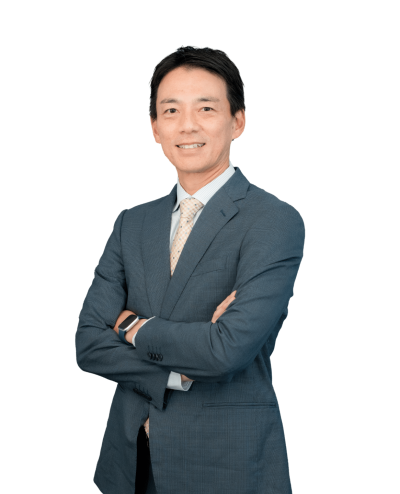
Mr. Toshinori Maema has served as President Director of PT. Kurita Indonesia since 2025, bringing over 20 years of experience in sales, marketing, technical, and business leadership within the water treatment industry. Having worked across Asia, Europe, and North America, he offers a global perspective on customer engagement, organizational development, and sustainable business growth.
Since joining the Kurita Group in 2004, Mr. Maema has held leadership positions at various Kurita companies in China, Europe, Japan, and Avista Technologies in the United States, where he served as President & CEO from 2023 to 2025 to focus on global initiatives to expand the Kurita reverse osmosis chemicals business. With more than half of his career spent outside Japan, he has developed extensive experience in leading multicultural teams and driving business growth across diverse markets.
Mr. Maema holds a degree in Biochemistry from Aoyama Gakuin University and completed the Leadership on Change program at IESE Business School. Fluent in Japanese, English, and Chinese, with elementary proficiency in German, he is passionate about fostering collaboration across cultures. Outside of work, he enjoys a wide range of sports, including golf, baseball, soccer, and basketball.