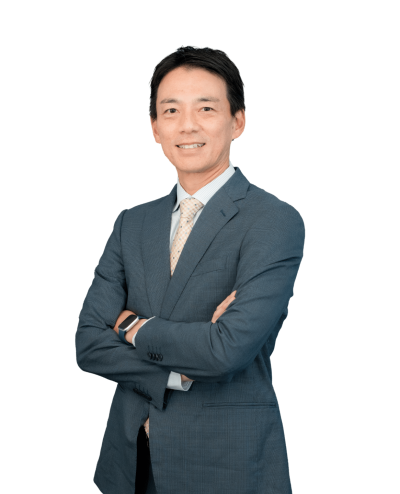
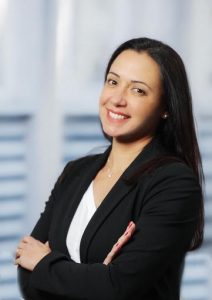
Sustainability Strategy Manager
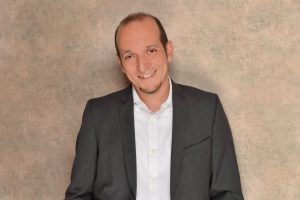
Global Marketing Director
At Kurita Europe, we are happy to welcome to our team this month Gianne Trindade, brand new Sustainability manager, with whom Paulo Gomes, our Global Marketing Director, had an interesting talk around Circular Economy.
– Why is this topic so important today?
– First, it’s important to understand the meaning of sustainability, because sustainability comes from the word sustainable, and by sustainable we are aiming to things that need to last. Sustainability is not just for environment, but it’s also for social issues and for business issues. In my first month at Kurita, I was positively impressed on what the company is already doing for sustainability not just as its core business, but also in its culture.
– What does circular economy mean, and which are its key principles?
– To understand the concept of circular economy, it’s important to understand the linear economy as an opposite. This last is the economy in which we have been living for centuries since the Industrial Revolution. Linear economy is basically the way in which we produce the products without considering the disposition, the end of life of them. That means that we say take, make, dispose without considering if this product will become a trash in the end. The circular economy is qualitatively different. Here we refer to a cycle. In this case, we aim to keep resources available for as long as possible, ensuring that products and materials remain in circulation, minimizing their waste. Here there is a big difference compared to the linear economy, and there are many related benefits: it reduces waste and conserves resources; it protects the environment and limits biodiversity loss; it reduces greenhouse gas emissions and stimulates economic growth.
– From your perspective, is this a European tendency or a more global trend?
– This must be a global action, because if we keep globally talking all the resources we are taking nowadays, this amount arrives to up to 60% more resources from the environment from what the Earth can regenerate in a year. If we keep this way, in 50 years, the planet will be totally different, and in a very negative way.
– Would you say that this is why circular economy is so important?
– Yes, exactly. Because we are talking about finite resources: soil fossils, natural gas, water. We need to think and consider this from the moment in which products are being designed. And we need to consider the way we use the resources, how we can maximize their usage and the way in which these resources are being disposed. As an example, since I’m living here in Germany since 2018, I have had two laptops. I brought one very old from Brazil which I was using for six years. And after one day the laptop didn’t want to work anymore. Instead of throwing it away, I figured that there was a small store close to my house where they were taking these laptops and dismantling them; taking the main part that was still working to build new ones, selling them for a very cheap price. But the beauty of this was no about money, but about helping the environment, helping the local store and helping the person who got this laptop after me. This is one example of circular economy that works, and there are many actions that we can do in that direction every day.
– Let’s come now to circular economy understood from the business’s perspective. What does it mean for an industry to adapt their way of producing to this concept?
– Circular economy for business and industries starts by changing mindsets. Because circular economy needs to be conceptually considered since the beginning, when the company decides to design a certain product. There is, for instance, renewable energy to be used in the production process. You can also decide to use products that can be recycled in an easier way. We need to give the customers a way to dispose these materials, in order that it comes back to be part of the cycle again. Another example will be in the fashion market, which is a very sensitive one because it uses a lot of water. Certain companies are offering a way for the customers to bring back the clothes that they don’t want anymore. At Kurita, we started now a cooperation with a company that is producing raw materials of renewables resources. It was interesting to me to read the Kurita environmental report, where found some interesting case studies where Kurita is supporting separates diapers for recycling rather than incinerating them. Another example that is shown in that report is on how Kurita membrane bioreactor systems, which are treating wastewater from food and beverage factories, are converting that wastewater to really high-quality water, with customers already using this technology in Japan, China and Thailand, with water reuse rates of above 90%.
– What do you think on how the success of circular economy can be measured?
– Circular economy is a topic that involves multiple actors: government, companies, customers, points for the materials to be collected. To measure the success of all of this, we need to start by measuring the involvement of all these parties in the process.
– How do you stay updated on these topics?
– Thanks you for the question. Not only for circular economy topics, but also for sustainability related ones, I sign up to some specific newsletters. I could recommend “ESG today”, which is a very interesting one. I also participate in LinkedIn groups in which we have some discussions about circular economy and in webinars. Unfortunately, after Corona, I’m not participating physically in events, but we have thousands of opportunities online. Lastly, and specifically for Circular Economy topics, I highly recommend, the website Ellen McArthur Foundation. They have also many case studies to read.
– We already talked about what the business might do. What can we do from a private/personal perspective?
– We should start by choosing reusable material alternatives, in the products we use, like glass, metal, silicone, reducing our plastic alternatives. Nevertheless, I think the most important is to reconsider the need of changing everything all the time. For example, why are we changing our phones or our cars every year? Another aspect in which the environmental impact is big, is in what it is related to food, specifically with red meat. Besides, reducing paper consumption and making a transition to renewable energies like solar, wind or hydro power. And also, to make our people around aware, bring as many people as possible together on this mindset. The world is changing very fast and changing the way that over seven billion of people will consume over the next years. We really need to consider our choices.
– And not only as individuals, but also as Kurita. And that’s why I really like to work in our company, because we are one of the partners to build up a global circular economy society. Gianne, thanks very much for your words today.